2026-10-22 ·
Oven Not Heating Evenly In Santa Clara County Homes
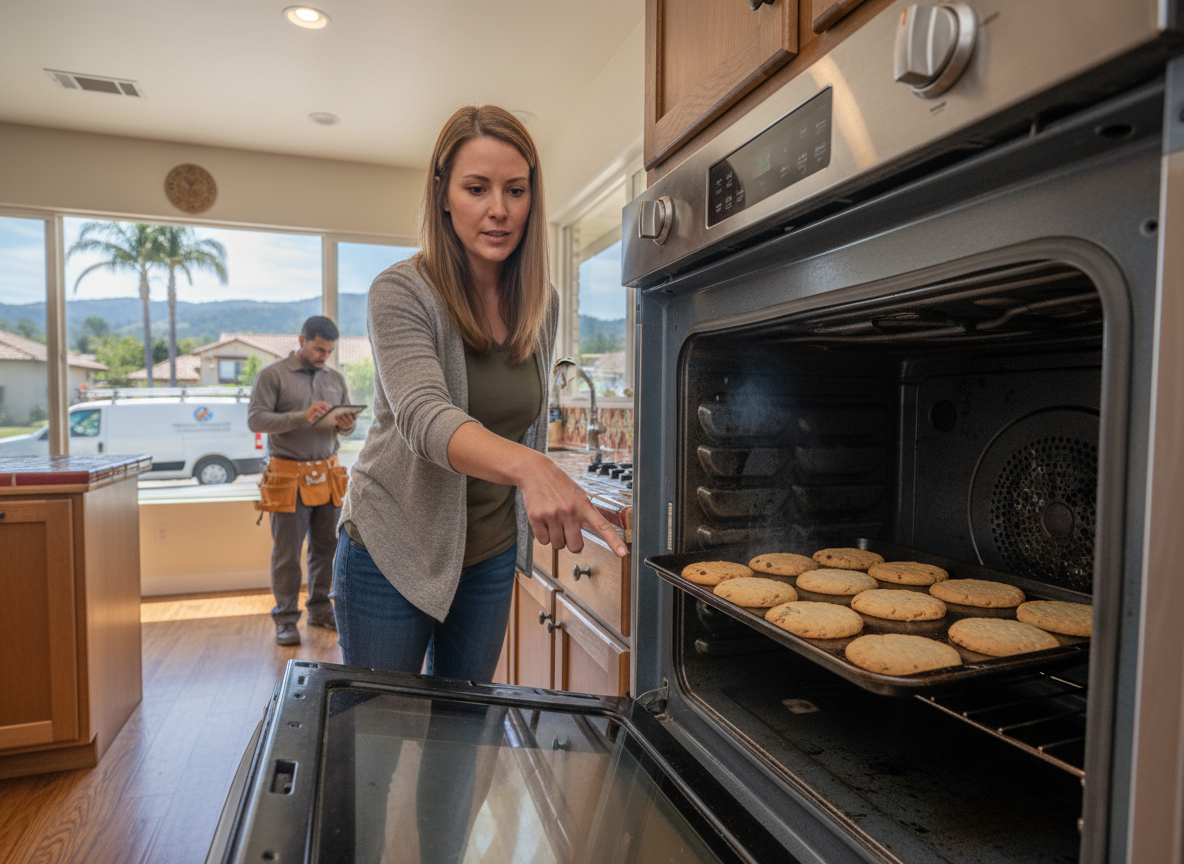
In Santa Clara County homes, ovens commonly stop heating evenly after 8–12 years as the bake and broil elements develop hot spots from repeated expansion during the area's Mediterranean climate of mild wet winters and warm dry summers.
Why Uneven Heating Appears in Campbell Housing Stock
Campbell's older single-family homes built before 1980 in neighborhoods like Downtown Campbell, Central Campbell, and West Campbell feature original wall ovens that cycle more frequently during temperature swings. These units sit in kitchens with limited ventilation near the Los Gatos Creek Trail corridor, where dust accumulation accelerates element corrosion. East Campbell and Hamilton properties often have 30-inch ranges installed in tighter spaces that trap heat unevenly around the door seal. Homeowners notice the left side running 25–50 degrees hotter than the right after the elements have logged thousands of cycles. San Tomas tract homes show similar patterns because the original wiring allows voltage drops that unevenly stress the lower element first.
How Local Weather and Terrain Change the Job
Santa Clara County's warm dry summers push ovens to run longer to maintain set points, drying out insulation around the elements faster than in cooler coastal zones. Winter rains raise indoor humidity in Pruneyard area homes, promoting minor corrosion on terminals that creates resistance differences between left and right sides. The flat valley floor means minimal seismic shifting, yet soil expansion around foundations in older East Campbell builds can tilt ranges slightly, altering airflow inside the cavity. These conditions differ from nearby Saratoga or Los Gatos hillside properties where cooler microclimates reduce total runtime. Technicians see the same element pair fail at different rates because one side receives more direct heat from the door during frequent summer baking.
Practical Diagnosis Steps for Homeowners
Start by running a 350-degree test with an oven thermometer placed on each rack for 15 minutes after preheat. Note any 25-degree or greater difference between center and corners. Remove the bottom panel and inspect the bake element for blisters or dark spots along its length. Check the door gasket for gaps wider than 1/8 inch that let heat escape unevenly. Test the broil element by switching to broil mode and watching for consistent orange glow across the entire tube. Record results over three cycles to rule out temporary thermostat drift. These checks identify whether the issue is element replacement or a deeper control board problem common in 15–20-year-old units still found in Pruneyard Shopping Center vicinity homes.
When to Schedule Oven Repair
Persistent temperature swings after element inspection point to a failing temperature sensor or control board that requires professional calibration. In Santa Clara County, these components typically need attention once the oven passes the 10-year mark. Oven repair addresses both element swaps and sensor replacement in a single visit. Readers dealing with related appliance issues can review dryer taking too long to finish loads for similar heating-element diagnostics. Homes in San Jose and Los Gatos share the same housing age patterns, making the same checks relevant across the county. Premier Appliance Repair maintains Mon–Sun 24/7 availability for these service calls.
Preventing Recurrence in Local Kitchens
After repair, run a self-clean cycle only when needed rather than monthly, as the high heat shortens element life in the region's already warm summers. Keep the oven cavity free of spills that carbonize and create insulation hot spots. Replace the door gasket every 5–7 years in homes near Campbell Park where frequent opening during holiday cooking accelerates wear. These steps extend even heating performance by several years in the typical Santa Clara County kitchen without requiring full appliance replacement.